AQUAPULSE
Gravel Concentrating Field Unit – 4 Pulse Unit or 5 Pulse Unit
The Problem
Vast amounts of gravel are transported over great distances to be processed, bringing with it the following issues:
- Expensive infrastructure such as trucks and well maintained roads are required
- The processing facilities are overworked with unnecessary volumes of non-diamond bearing gravel
- High fuel costs and environmental impact
- Environmental rehabilitation is complicated as gravel is removed from the mining site
Furthermore, production inefficiencies are already formed at the mining site, as contractors are forced to halt excavation or dredging in order to allocate time for loading and transporting gravel.
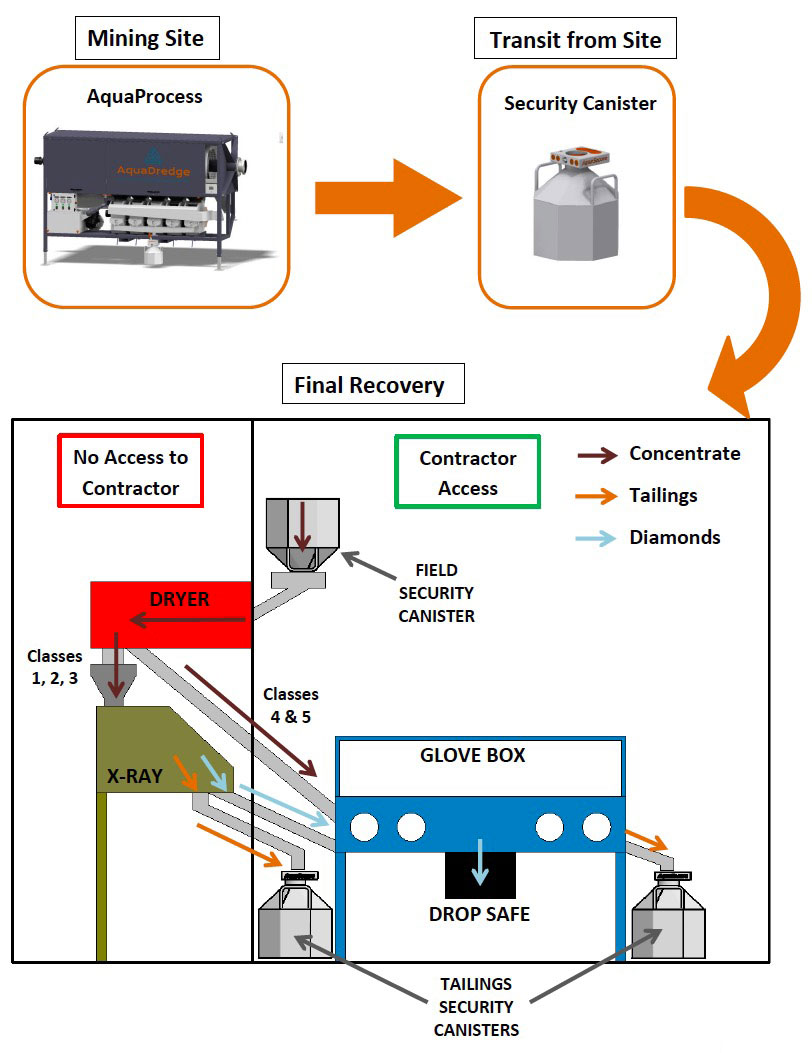
This traditional approach is necessitated by security weaknesses inherent to transportation of concentrated gravel. To provide an alternative, it is essential to ensure that there will be no compromise on the product security to the concessionaires.
Our Solution
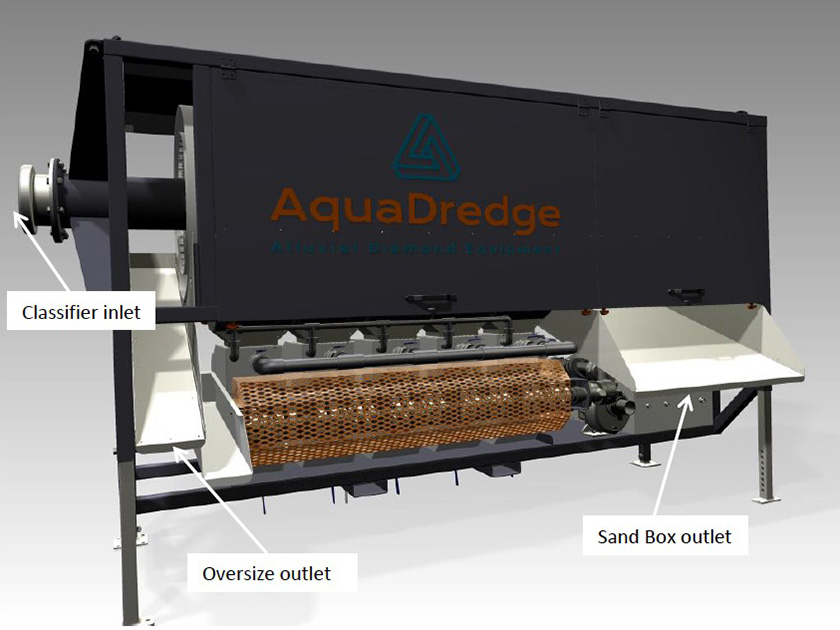
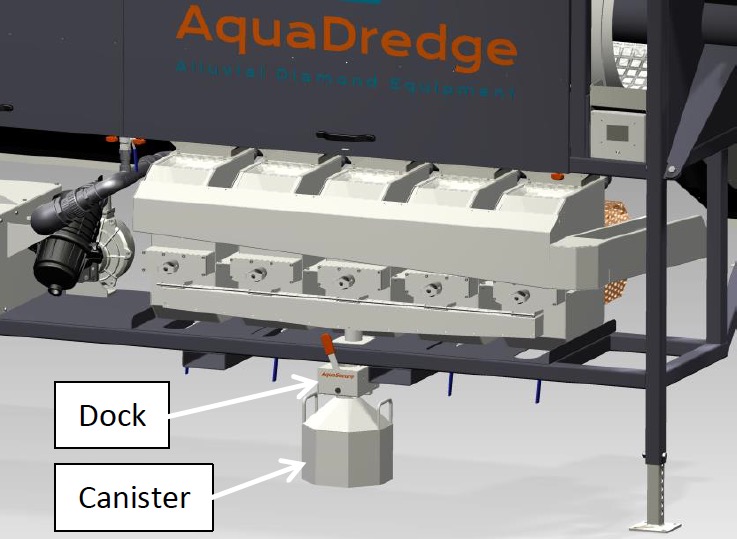
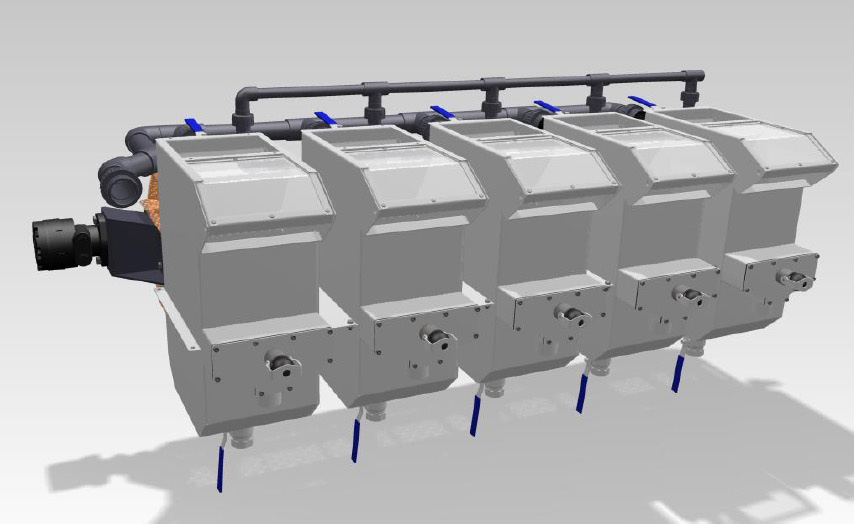
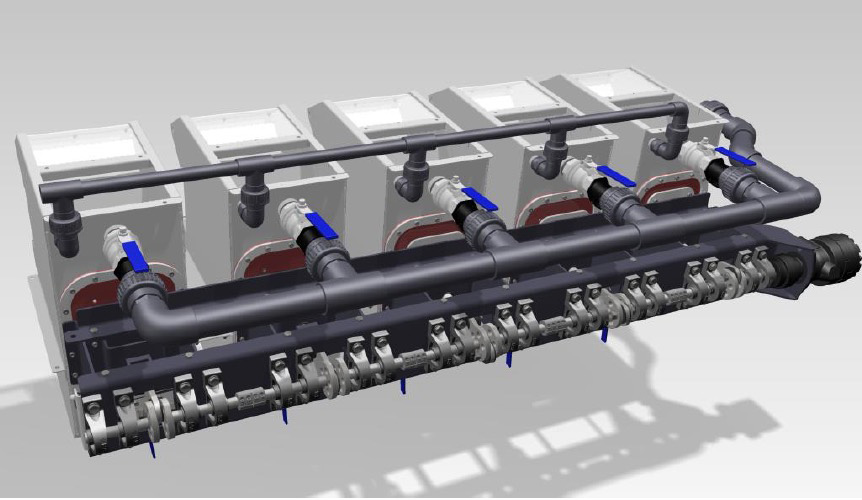
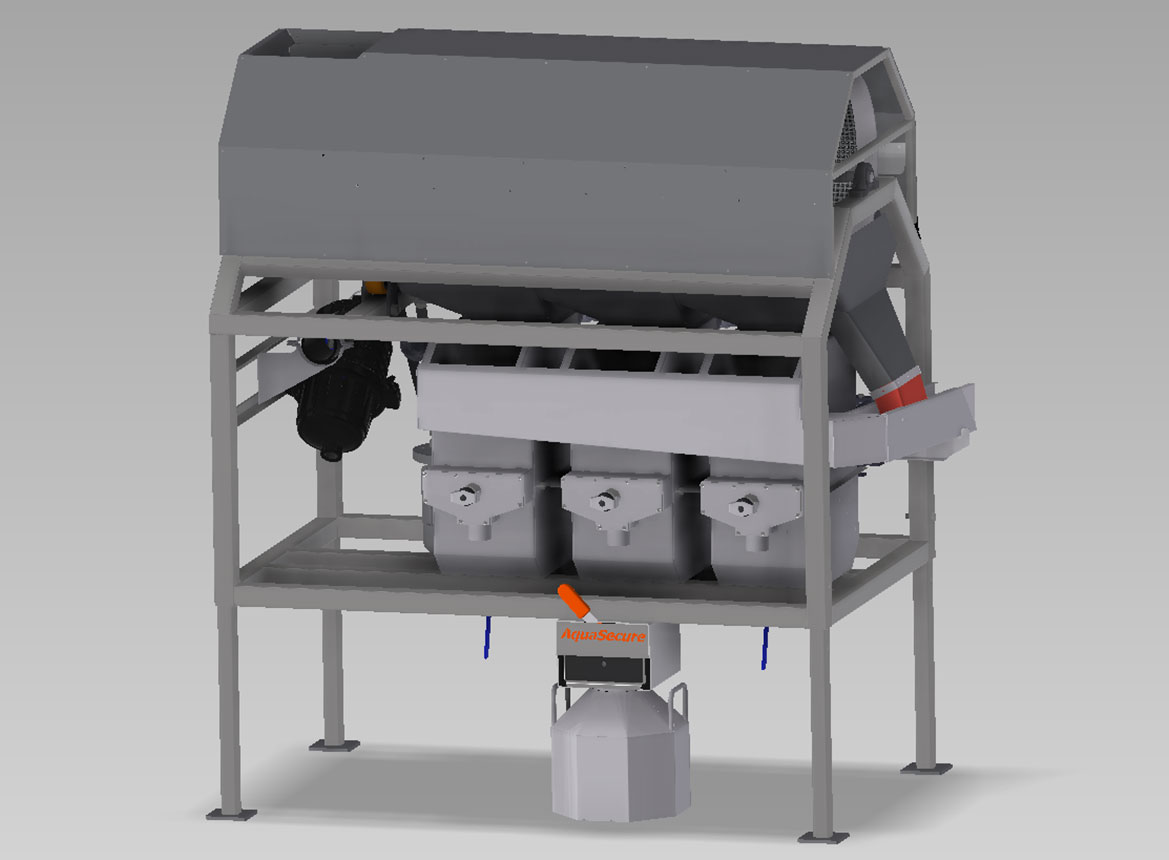
The unit consists of a AquaClass classifying trommel screen (classifier) and AquaPulse density separating units (pulsators), mounted on a frame for marine vessel use, or a towable trailer for land based mining. The pulsators are located directly below the classifier and receive the gravel directly with no access from the outside. The pulsators discharge the low density material which is then washed away.
AquaPulse
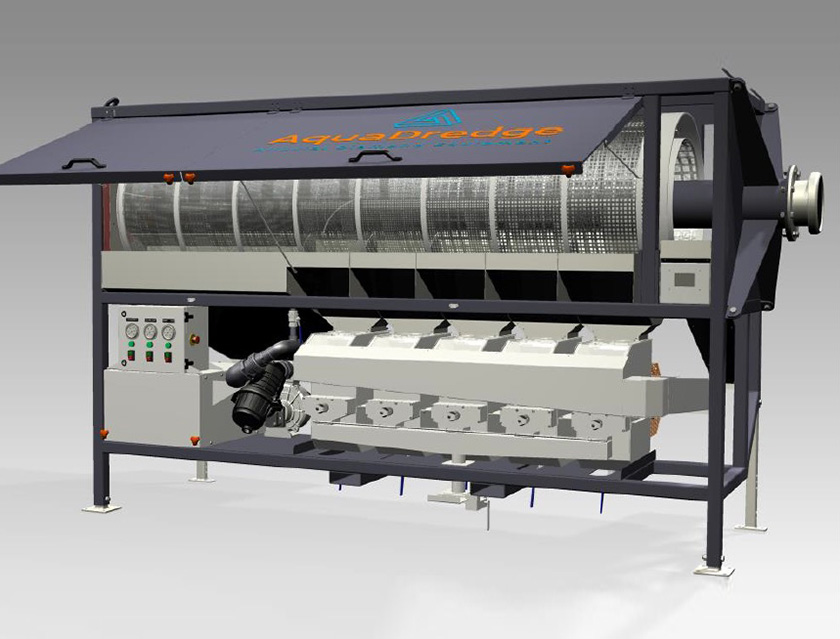
Classifying Trommel View
AquaPulse
Overboard Side View
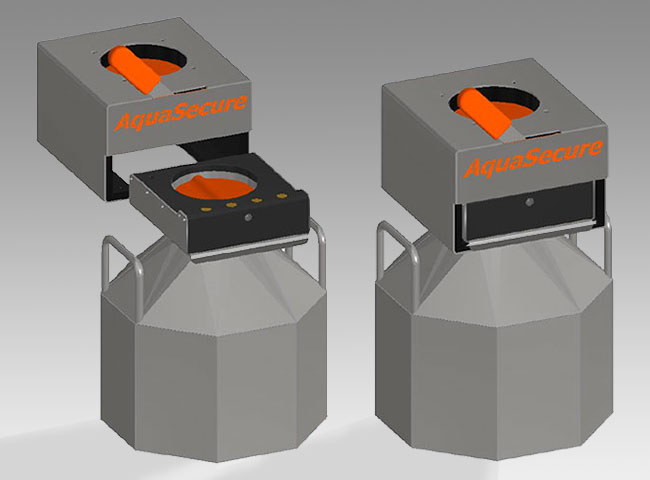
AquaSecure
Security Dock & Canister
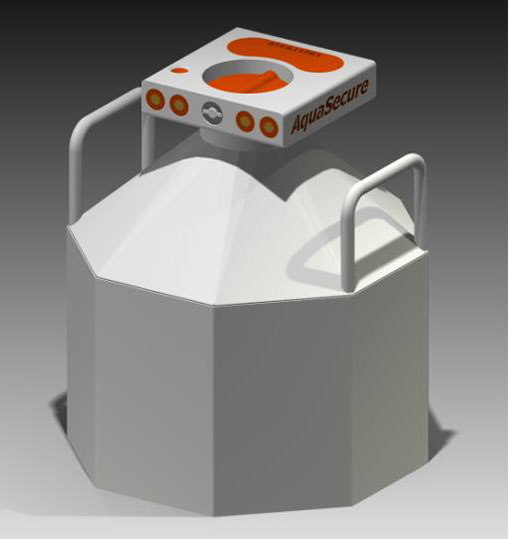
AquaProcess
AquaSecure fitted onto AquaPulse
Overview
The classifier drum is entirely constructed of 316L stainless steel and features several design characteristics to ensure performance and security. Firstly, the drum consists of a full length inner and outer screen. The inner screen is constructed of a course, strong mesh that serves two purposes. It receives the bigger rocks and stones and guides this material toward the exit, protecting the finer mesh lining the outer drum. It also prevents larger debris from blocking the fine mesh of the outer drum. Secondly the inner mesh forms a barrier to the material being classified on the inside of the outer drum, thus acting as a security measure.
The outer drum is divided into two or more sections. The first and largest is the sand screen which separates the water and fine material (under 1.6mm diameter) from the gravel. Following this stage there are one or more fractioning mesh classes of 340mm in length, completely customizable based on requirements. As material flows over the classes, the selected range falls through and is directed into the funnelled inlets of the pulsators.
The two drums are separated by a spiral that moves the material along in a controlled manner and at a determined rate. This ensures the correct retention time regardless of the inclination of the screen drum, improving the performance. The spiral also forms a physical barrier from the outlet side against access to the gravel being screened.
AquaDredge developed an in-house pulsator module called the AquaPulse. In order to ensure a quality product capable of high processing volumes, the decision was made to base the design on a bottom feed unit. Consultation with industry experts concluded that this approach would grant more guarantee against loss of diamonds, especially in the low carat range.
A further design criterion that was insisted on at the beginning was to have the pulsator directly below the classifier. This requirement was mainly for security reasons, but also to minimise the footprint of the assembly to make it viable for use on smaller offshore vessels where space is always at a premium. Furthermore it eliminates auxiliary equipment requirement to move gravel from the classifier to the pulsators, increasing reliability of the system.
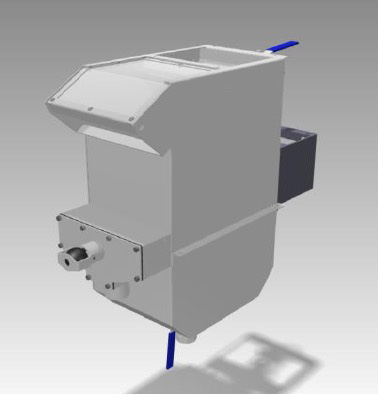
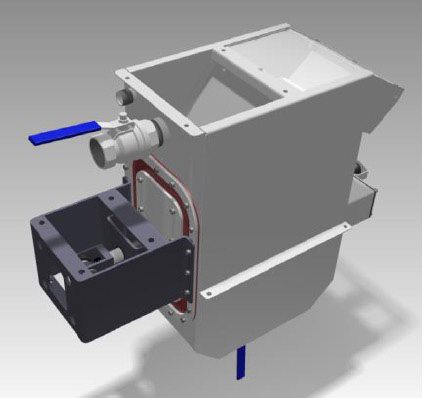
To ensure that the overall unit height stayed as low as possible, the pulsator design features a side pulse generator instead of the more common bottom located generators. This approach not only saves vertical space, but significantly simplifies maintenance. The entire unit is constructed of 316L stainless steel and utilizes engineered materials such as Vesconite on moving parts to ensure reliability and low maintenance.
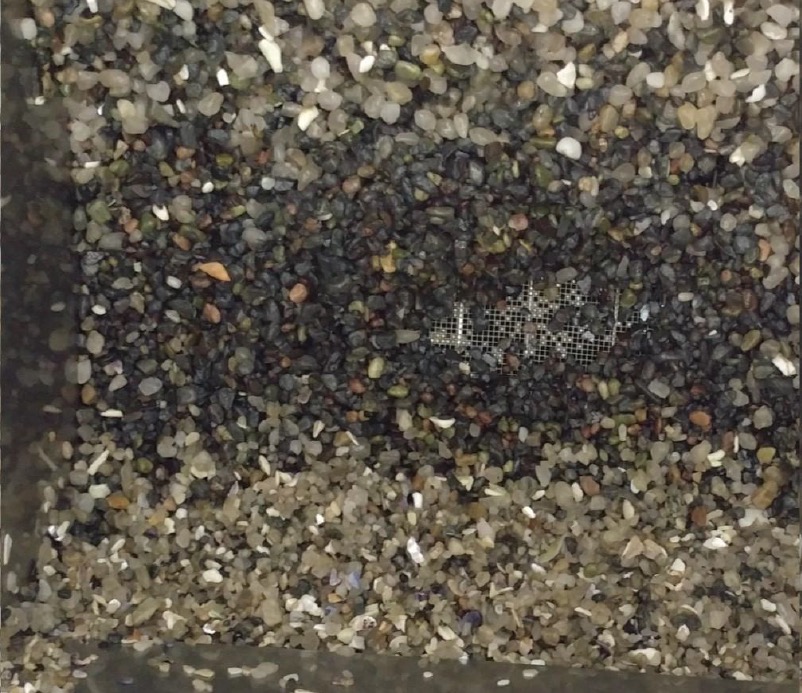
Each AquaPulse pulsator is capable of processing up to 1 ton of screened gravel per hour. Concentrate is built up on the slanted bed, while low density material is expelled over a waste chute and directed to be washed away. When mining is seized for the day, an extraction hatch is opened via a lever and the concentrate is washed out into a latched security canister.
Furthermore, each pulsator is fitted with an electronic flowmeter. Flowrates are displayed on a control panel. The operator can adjust the flow to the design specifications via a ball valve to ensure each unit operates within the design parameters.
Front Side View
Rear Side View
|
AquaProcess Marine 8×4 |
AquaProcess Marine 8×5 |
|
|
Weight |
1050kg |
1300kg |
|
Dimensions (LxWxH) |
3m x 1.4m x 2.3m |
3.4m x 1.4 x 2.3m |
|
Inlet diameter |
8 inch Table D Flange |
8 inch Table D Flange |
|
Water flow rate |
700 l/min |
800 l/min |
|
Hydraulic flow rate |
40 l/min |
45 l/min |
|
Hydraulic pressure |
150 bar |
150 bar |
|
Electric supply |
12Vdc or 100-240Vac (<100W) |
12Vdc or 100-240Vac (<100W) |
|
Pulse rate |
120 pulses/min |
120 pulses/min |
|
Screening Sizes |
+1.6 -12.5mm |
+1.6 -19mm |
|
Screened gravel processing rate |
1000kg/h per pulsator = 4ton/h |
1000kg/h per pulsator = 5ton/h |
|
Gravel density cut |
< 3 sg (expelled) |
< 3 sg (expelled) |
Performance
In order to ensure optimal performance, computational fluid dynamics (CFD) was used to optimise the flow characteristics of the pulsator. In high volume concentrating units of a small form factor such as the AquaPulse, flow dynamics play a paramount role in ensuring that flow irregularities are engineered out. Any significant turbulence, jets or vortex currents can cause flow abnormalities over the bed of the pulsator, potentially leading to displacement of heavier material from the bottom of the bed. As the higher gravel volumes reduce the retention time of gravel transitioning through the machine, any heavier material displaced upward could then be directed to the outlet before it has received sufficient time to settle.
A slanted bed further complicates flow dynamics because of the inherent tendency of water to take the path of least resistance, i.e. where the gravel bed is at its thinnest. A slanted bed is however required to ensure a self-extracting (to vacate the concentrate), hands-off machine.
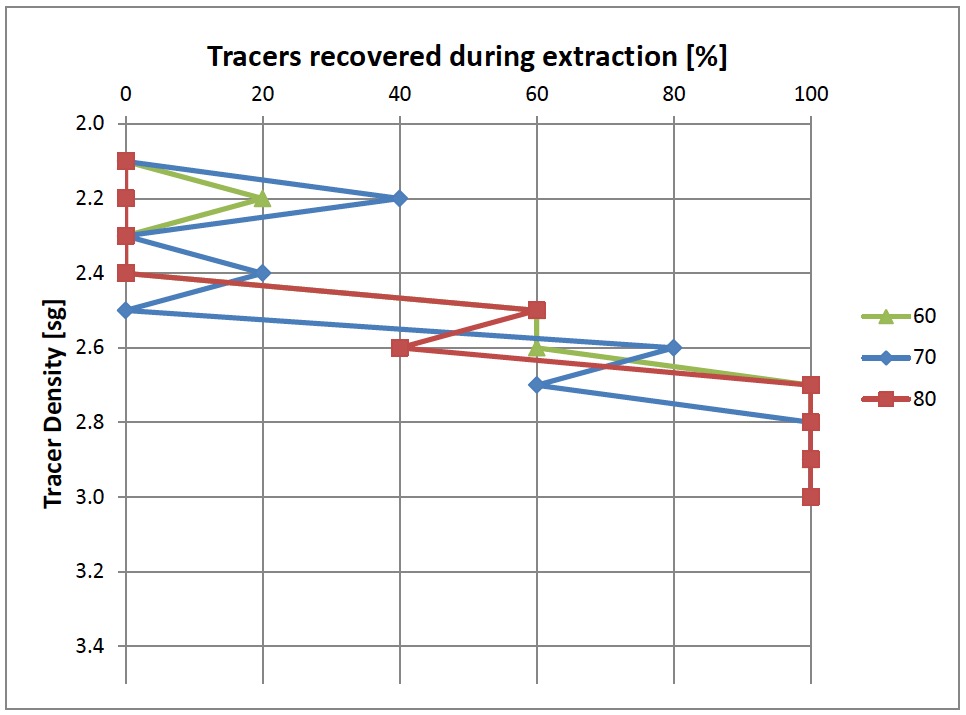
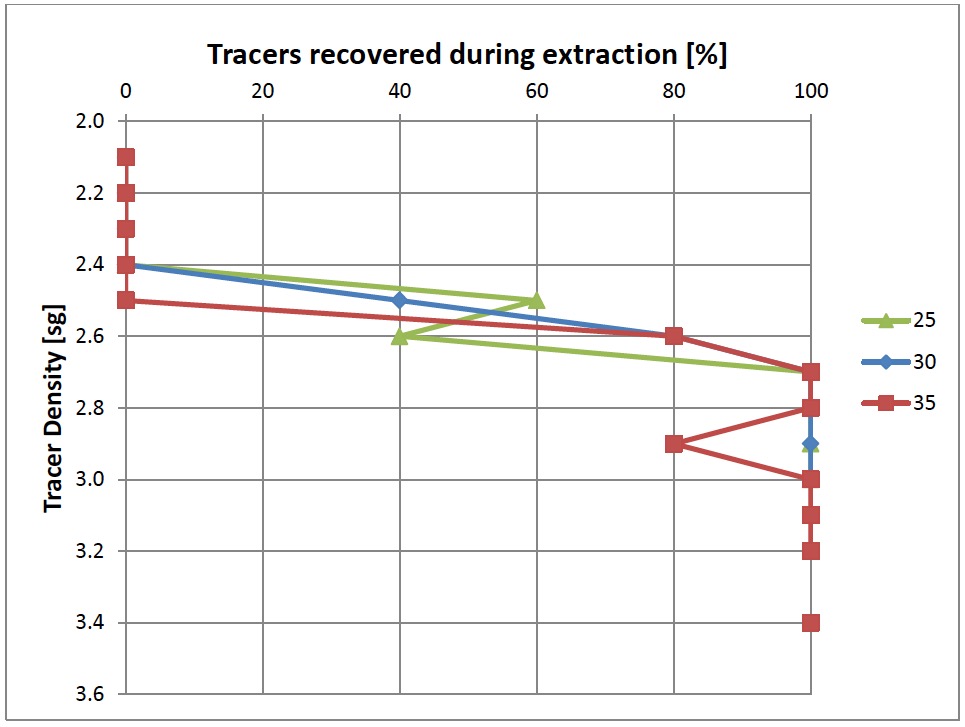
The AquaPulse features flow vectors that are almost perfectly linear and velocity variance across the bed is no greater than 10%.
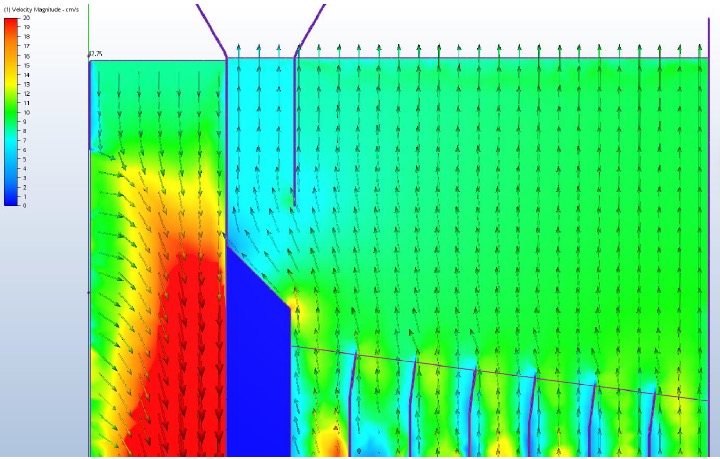
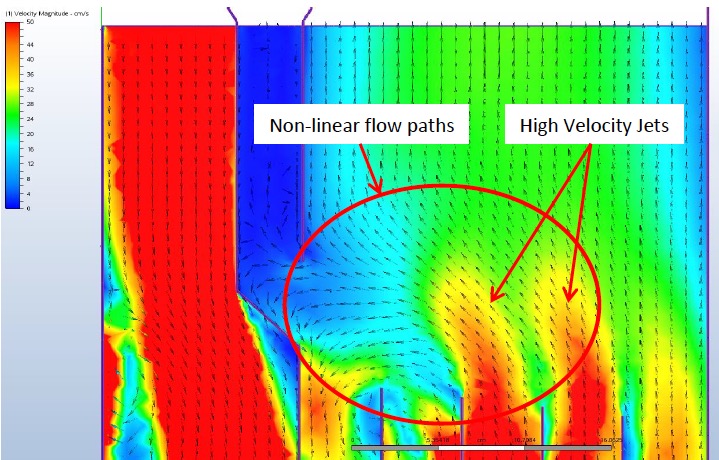
Sample data is presented in Graph 1 and 2. The absolute cut (where 100% retention is achieved) is consistently between 2.8sg and 3.0sg.
View It In Action
Highlighted Features
Multi Use
Ultimate Efficiency
Security
Request a quote
Other Products
AquaJig
3 Pulse Gravel Concentrating Unit